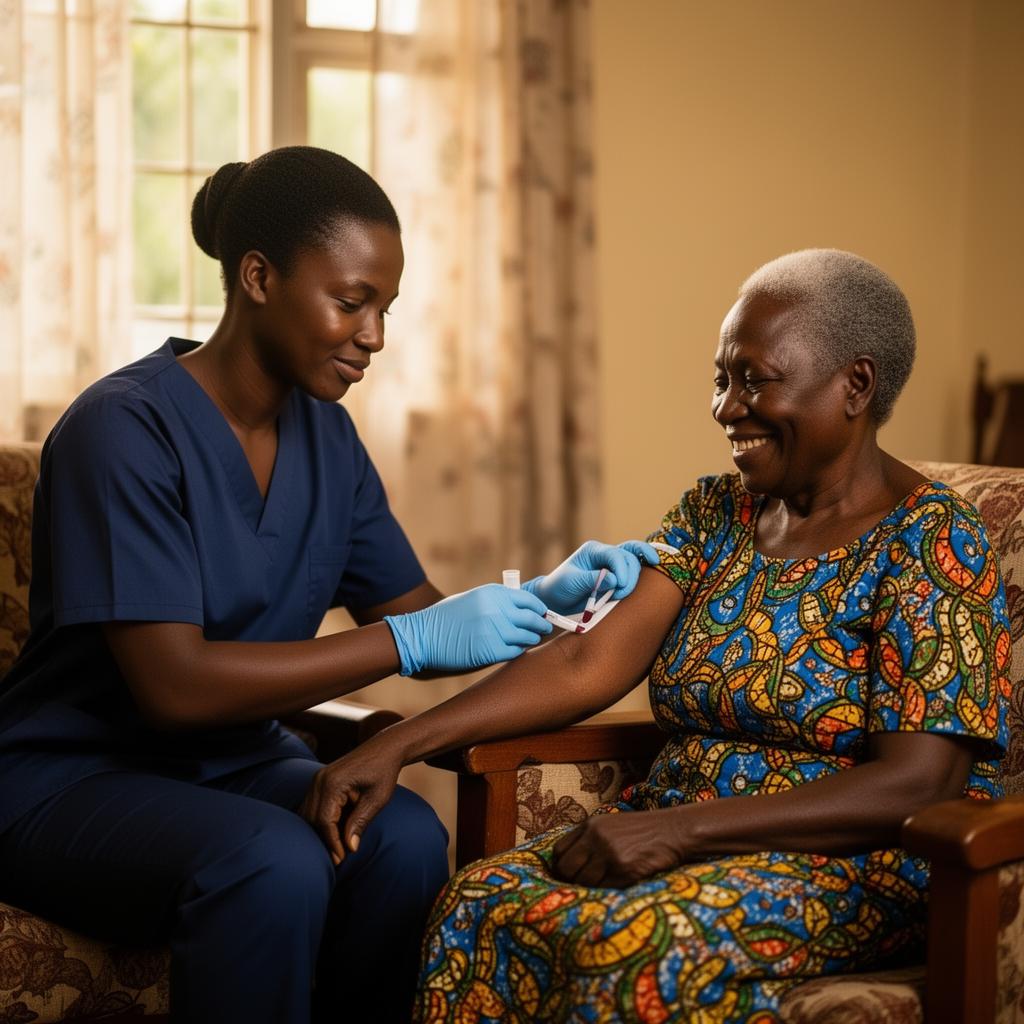
Professional medical laboratory services delivered to your doorstep. Our qualified Medical Laboratory Scientists come to you — safe, fast, and accurate results every time.
Convenient Medical Diagnostic Laboratories is a modern diagnostic facility established in 2025 in Cape Coast, Ghana. We specialise in mobile laboratory services — bringing certified testing directly to patients in their homes, offices, or care facilities.
Click each service tab to explore all available tests, what they measure, and why they matter for your health.
Blood tests examine the cellular components of blood to detect anaemia, infections, clotting disorders, and many systemic diseases. A small sample of blood reveals a wealth of information about your overall health.
Measures red cells, white cells, haemoglobin, haematocrit, and platelets in a single comprehensive panel.
Determines your ABO blood type (A, B, AB, or O) and Rhesus factor (positive or negative).
Measures how quickly red blood cells settle in a tube over one hour as an inflammation marker.
Detects malaria parasites (Plasmodium species) in blood using antigen-based rapid testing.
Measures the percentage of red blood cells in total blood volume.
Microscopic examination of blood cells to assess their shape, size, and appearance.
Evaluates how well blood clots by measuring prothrombin time and activated partial thromboplastin time.
Detects the presence of abnormal haemoglobin variants including sickle cell trait (AS) and sickle cell disease (SS).
Urine analysis provides a window into kidney function, urinary tract health, metabolic status, and systemic diseases. A non-invasive, painless sample collection makes it one of the most accessible screening tools in medicine.
Comprehensive physical, chemical, and microscopic examination of urine including colour, pH, protein, glucose, ketones, and cells.
Identifies bacteria in urine, cultures them to confirm the organism, and tests which antibiotics will be effective.
Detects human chorionic gonadotropin (hCG) hormone in urine to confirm or exclude pregnancy.
Measures the ratio of protein to creatinine in urine to quantify proteinuria without a 24-hour collection.
Detects very small amounts of albumin in urine that are not detectable by routine dipstick testing.
Detects glucose spilling into urine, which occurs when blood sugar levels exceed the kidney threshold.
Microbiological testing identifies the exact bacteria, fungi, or parasites causing an infection and determines the best treatment. This precision prevents misuse of antibiotics and ensures effective targeted therapy.
Detects bacteria or fungi circulating in the bloodstream by incubating blood samples and identifying growing organisms.
Examines stool for bacteria, parasites, and their eggs to identify gastrointestinal infections.
Cultures bacteria from wound, throat, ear, eye, or genital swabs to identify the infecting organism.
Detects antibodies against Salmonella typhi antigens in blood to diagnose typhoid fever.
Stains sputum or other specimens to detect Acid-Fast Bacilli (Mycobacterium tuberculosis) under microscopy.
Potassium hydroxide preparation dissolves skin cells to reveal fungal elements including hyphae and spores.
Screens for Methicillin-Resistant Staphylococcus aureus, a dangerous antibiotic-resistant bacteria.
Detects Helicobacter pylori antigen in stool or antibodies in blood associated with gastric ulcers.
Clinical chemistry measures chemicals, enzymes, and metabolites in blood and other body fluids to evaluate the function of organs including the liver, kidneys, heart, and pancreas.
Measures ALT, AST, ALP, bilirubin, albumin, and total protein to assess liver health and function.
Measures urea, creatinine, and electrolytes (sodium, potassium, chloride) to evaluate kidney function.
Measures total cholesterol, HDL, LDL, and triglycerides to assess cardiovascular risk.
Measures blood sugar after at least 8 hours of fasting to screen for and monitor diabetes.
Measures average blood glucose over the past 2-3 months by assessing the percentage of glycated haemoglobin.
Measures calcium, phosphate, and alkaline phosphatase to evaluate bone metabolism and parathyroid function.
Detects proteins released into the blood when heart muscle is damaged.
Measures this liver-produced protein that rises rapidly in response to inflammation or infection.
Measures uric acid levels produced from the breakdown of purines in food and body cells.
Measures serum iron, ferritin (iron stores), and total iron binding capacity to fully evaluate iron status.
Hormones are chemical messengers that regulate virtually every function in the body. Hormone testing identifies imbalances affecting thyroid, reproductive health, adrenal function, and metabolism.
Measures the pituitary hormone that controls thyroid activity. The primary screening test for thyroid disorders.
Measures the active, unbound thyroid hormones in blood circulation.
Measures the hormone that stimulates egg development in women and sperm production in men.
Triggers ovulation in women and testosterone production in men.
Measures total and biologically active testosterone in both men and women.
The primary female sex hormone that regulates the menstrual cycle, bone density, and fertility.
Hormone produced by the pituitary gland primarily responsible for milk production.
Prepares the uterus for pregnancy and maintains early gestation after fertilisation.
Reflects the size of a woman's remaining egg reserve (ovarian reserve).
The primary stress hormone produced by the adrenal glands with a natural daily rhythm.
Measures insulin production and secretion to evaluate pancreatic beta-cell function.
Regulates calcium and phosphate levels in the blood and bones.
From your first call to receiving your results — here is exactly what happens during a CMDL home visit, step by step.
Call, WhatsApp, or book online. Tell us your location, tests needed, and preferred time.
Our qualified MLS scientist travels to your home or office with sterile, certified equipment.
Blood, urine, or swab samples taken safely and comfortably in your own environment.
Samples transported in sealed, temperature-controlled containers and analysed in our certified lab.
Accurate results delivered digitally via WhatsApp or email, or in person — within 24 hours.
All collection equipment is single-use, sterile, and opened in front of you. No risk of cross-contamination.
Samples are sealed in certified biohazard containers and transported in temperature-controlled cool boxes to preserve integrity.
Every sample is processed using calibrated, quality-controlled instruments following standard operating procedures.
Results are sent only to you through a secure channel. Your health information is never shared without consent.
Most routine results are ready within 24 hours. Urgent results are prioritised and communicated immediately.
All fields marked * are required.